Showing posts with label Speedo. Show all posts

Wednesday, July 22, 2009

Swimsuit Competition At The World Championships

Because of the technical swimsuit controversy in pool swimming, we thought it would be interesting to see what technical swimsuits were worn by the open water swimmers at the 2009 World Swimming Championships.

We noted the swimsuits of all the swimmers in the 5K and 10K races.

Before the start of each race, the swimmers walked approximately 100 meters from the call room to the water's edge.

This gave us plenty of time to correctly identify and count the swimsuits worn by the open water swimmers. If there was any doubt as to what manufacturer made a swimsuit, we did not count in any manufacturer's total. The results of two races are listed below:

The participants in the women's 5K race wore the following:

16 swimmers wore blueseventy
16 swimmers wore Arena
8 swimmers wore Speedo
2 swimmers wore swimsuits that could not be identified
1 swimmer wore TYR
1 swimmer wore Diana

The participants in the men's 10K race wore the following:

16 swimmers wore blueseventy
9 swimmers wore Speedo
9 swimmers wore swimsuits that could not be identified
6 swimmers wore Arena
5 swimmers wore TYR
2 swimmers wore Jaked
1 swimmer wore Adidas

Monday, June 22, 2009

Newly Approved FINA Swimsuit List

Under the interim regulations of the Dubai Charter, FINA announced today its approval of dozens of additional swimsuit models from 20 different manufacturers. The announcement will lead to follow-up announcements by national governing bodies and some quick decisions by swimmers worldwide.

The manufacturers included Adidas, Arena, Asics, blueseventy, Descente, Diana Sport, Essenuoto, Footmark, Jaked, Kiwami, Leonian, Mizuno, Mosconi, Okeo, Orca, Aquazone, Speedo, Sports Hig, TYR and Yamamotohokosyo.

The full FINA approved swimsuit list can be seen here.

Dozens of technical swimsuits were resubmitted - with modifications - to FINA and its Swimsuit Commission after the first group of swimsuits were approved in May. According to FINA, in some cases, the manufacturers submitted explanations why the construction or material of their swimsuits does not create air trapping effects.

FINA determined that evidence of 'in use' air trapping effect is complex, requiring additional time and resources to create and implement comprehensive control mechanisms and objective test procedures to review the air trapping effects.

The approved swimsuits for the FINA World Swimming Championships in Rome from July 17th to August 2nd must be labelled and will be checked in Rome prior to competition. The rules regarding shape, use of only one swimsuit and no taping will be strictly applied and controlled in the call room before all pool swimming and open water swimming events.

We only wonder what swimsuits - and training equipment - the next generation of swimmers and coaches will employ in their pursuit of swimming better.

Wednesday, April 29, 2009

You Can't Use This In The Channel

All waterproof audio devices are outlawed in the English Channel and most swimming pools in Asia and certainly frowned upon by competitive pool swimming coaches, but we personally have found the best waterproof audio devices have great sound in the water, are easy to operate, are lightweight and can make a 5K open water swim go by very fast.

We have tried several waterproof audio devices, including the Speedo AquaBeat MP3 Player (shown on left) and the FINIS SwiMP3 V2 (shown below).

While we do not endorse any device in particular, we do think this online advertisement was clever and well-made.

Enjoy the aqua-advertisement.

Thursday, January 22, 2009

The Evolution of the Sport

In a recent article in the Sydney Morning Herald, Steve Meacham writes about racing etiquette and high-tech swim suits.

His article touched on the debate among swimmers in the build-up to the Big Swim in Sydney, Australia.

The open water swimming community is debating if competitors should be allowed to swim in the latest high-tech suits. But, the Big Swim enthusiasts delve even deeper into more fundamental issues: Is it acceptable for faster swimmers to swim over the top of slower competitors? Should race organizers police antisocial behavior especially around the turn buoys?

Because our sport is growing FAST all over the world attracting people of all ages and abilities to events in every kind of water, we will inevitably run up against various issues. Fortunately, the sport, its rules, its equipment, its training methodologies, its timing technology, its national and international infrastructure and its athletes are continuously evolving … for the better.
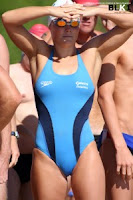
To use an open water analogy, we may be swimming in a bit of rough water now, but the currents are strongly in our favor.

This year, the Big Swim organizers leveled the playing field by forcing swimmers to wear conventional swim suits. The organizers decided that the swim suits must contain no neoprene or any other 'high-tech' material or any material with any flotation support. The male suits cannot cover any part of their body above the waist and female suits cannot cover their arms or legs.


This decision eliminated the use of blueseventy, Speedo, TYR and other high-tech swim suits to the satisfaction of purists.

For those who did make the investment in a high-tech suit, they may be disappointed. From our perspective, a better alternative is to offer a 'high-tech' race and a 'traditional' race for the competitors.

We say: double the fun, don't half the alternatives.


Unlike pool swimming which is limited to 8 people racing in rectangular chlorinated pools with lines, lanes and controlled water temperature, open water swimming venues and competitions are only limited by the creativity of race directors and the desires of swimmers.

It is our belief – backed by observations and economic reality – that open water swimmers – both newcomers and veterans – will continue to demand and purchase a variety of high-tech suits, wetsuits and all kinds of new products that have yet to be designed or manufactured.

While many people enjoy open water swimming primarily for the challenge of finishing and the camaraderie of the sport, many others like to push themselves to see how fast they can swim – whether it is a race against others or as a comparison to their previous performance.

While we understand and greatly appreciate swimming in nothing but a traditional swim suit and goggles, we also understand why many people enjoy the speed and performance enhancement they feel in a high-tech suit.

While we understand the sense of fairness and establishing a level playing field, we also wonder think that if high-tech suits are allowable in the pool, then they should also be allowed in open water events.

While we understand the high-tech suits are costly and not everyone can afford them, we also think that a more restrictive policy is not optimal in a sport that is growing and attracting new enthusiasts every day.

While we understand and appreciate the challenge of swimming in cold water, and learning how to swim properly without having the advantages of high-tech suits, we also greatly appreciate the financial support the new high-tech suit manufacturers have provided to the sport.

Isn't it better to keep both sides of the debate happy? From Hong Kong to Helsinki, many races have a 'wetsuit' and a 'non-wetsuit' division. Give more awards – not fewer – and keep more swimmers happy.


Perhaps another alternative is to establish a new award category With contemporary timing systems, it is easy to compare the times of the 'high-tech' swimmers versus the 'traditional' swimmers. To create a little buzz, race directors can handicap the competitors.

That is, if the average time of high-tech swimmers from the previous year is 90 seconds faster than the times of traditional swimmers, then the high-tech swimmers can be handicapped by 90 seconds. See who 'wins' the race and give that swimmer a special award.

In any case, the Big Swim has made its decision. Some people are happy; some are not; and others are indifferent. Swimmers can now swim mano-a-mano under traditional rules competing for the same prizes. We applaud the decision-makers.

On the other hand, we believe open water swimming is extremely enjoyable for a rapidly increasing number of individuals. Not only are there race directors who see the value in allowing high-tech suits, but there are also many newcomers and veterans who enjoy racing in a high-tech suit.

In summary, we believe the demand for fast suits and new technology will continue at an unrelenting pace while purists can still enjoy the sport in the manner they see fit.

The evolution of the sport is good for all.

Monday, December 22, 2008

What To Wear

Speedo or TYR? XTerra Wetsuits or Blueseventy? Arena or Diana? We have written about what the world's elite marathon swimmers wore at the 2008 World Open Water Swimming Championships (click here), but this is a difficult decision for everyone.


FINA is currently reviewing the procedures for swimwear approval, specifically in terms of the swimsuit material, thickness, use, shape and availability.


The swimwear manufacturers, FINA Technical Swimming Committee (whose members include Don Blew of Australia, Carol Zaleski of the USA, Soeren Korbo of Denmark, Ricardo Moura of Brazil, Javier Careaga of Mexico, Harold Cliff of Canada, Shigeo Ogata of Japan, Yuan Jiawei of China, Ben Ekumbo of Kenya, Michel Salles of France, Andrea Thielenhaus of Germany and Andriy Vlaskov of Ukraine), FINA Athletes Commission (whose members include Janet Evans of the USA, Alexander Popov of Russia, Gustavo Borges of Brazil, Penny Heyns of South Africa, Fernando Platas of Mexico, Luo Xuejuan of China, Miyako Tanaka of Japan, Irina Viguzova of Russia, Francesco Attolico of Italy, Karine Schuler of France, Daniel Kowalski of Australia and Attila Czene of Hungary), FINA Coaches Commission (whose members include Osvaldo Arsenio of Argentina, Leiff Carlsson of Sweden, Alan Thompson of Australia, Shaozhen Zhong of China, Juan Jane Giralt of Spain and John Leonard of the USA) and the FINA Legal Commission will meet in Lausanne, Switzerland on February 20, 2009.

The different commissions will discuss the current issues facing the sport and study eventual solutions for the future, together with independent experts. FINA will then take appropriate action in the FINA Bureau meeting from March 12-14, 2009 in Dubai (UAE).

The issue of swimwear approval is clearly a complex one and, to its credit, FINA is asking for collaboration from its stakeholders, so its final decisions can be globally accepted and understandable by the worldwide swimming community.

Upper photo by Javier Blazquez at the 2008 World Open Water Swimming Championships.

Monday, October 27, 2008

Best Open Water Swimming Suit

At the 2008 World Open Water Swimming Championships in Seville, arguably the most pressure-packed, competitive, fast-paced open water swimming race in history, other than the Olympic 10K Marathon Swim , it was interesting to note the types of swim suits worn by the athletes.

On the women’s side, I was able to confirm the following competitive suits that the athletes wore in the 10K Olympic qualification swim:

Speedo – 22
blueseventy – 7
TYR – 5
Arena – 4
Adidas – 2
NIKE – 1
Diana – 1

On the men’s side, I was able to confirm the following swim suits that the athletes wore:

Speedo – 12
blueseventy – 12
Arena – 8
TYR – 3
Adidas – 3

It must be noted that I was only able to confirm the suits of 42 of the 51 female swimmers in the competition and 38 of the 55 male swimmers due to the myriad activities at the start and finish of the event. I observed these suits with a colleague while we were standing near the starting dock before each of the 10K races on May 3rd (women) and May 4th (men), 2008

NOTE: this information should NOT be taken as definitive information or an implied or explicit endorsement of any particular suit style or manufacturer. As any manufacturer, coach, swimmer or data analyst knows, the unknown information on the remaining 9 female swimmers and the remaining 17 male swimmers can change the interpretation of the information presented. Additionally, some federations had required swimmers to wear certain swim suits, while other federations left the decision up to the athletes.

Upper photo taken just before the start of the women's Olympic 10K qualification race at the 2008 World Open Water Swimming Championships.

Lower photo taken by Giorgio Scala of Deep Blue Media.

Tuesday, July 29, 2008

No Speedo LZR Racers in the English Channel

According to the Channel Swimming & Piloting Federation, no person in a standard attempt to swim the English Channel shall use or be assisted by an artificial aid of any kind, but is permitted to grease the body before a swim, use goggles, wear one cap and one costume. The word "costume and cap" shall mean a garment, not made of neoprene or rubber or any other material considered by the Federation to give a similar type of advantage, and not in any way designed to contain body heat, and/or aid buoyancy.

The official observer will have to approve the "costume and cap". The swimmer must make sure their "costume and cap" are of an approved type before the swim starts as the swim will not be recognised if they are later found not to conform.

According to Marcia Cleveland, a widely recognized Engish Channel authority, this rule is interpreted as the suit can only come down to the knees.

Therefore, the Speedo Kneeskin that goes to the knees is acceptable, but several variations of the Speedo Fastskin (Legskin and Bodyskin, shown above) and the new Speedo LZR Racer, that has caused a sensation among pool swimmers, are not acceptable for recognized English Channel attempts.

Copyright © 2008 by World Open Water Swimming Association

Monday, July 21, 2008

Old-School Goggles Coming Back

A quick survey of retailers finds that "those-goggles-that-Dara-wears" are making a comeback and have become quite popular.

"The Speedo Pro are old school and people are just coming in and buying all our inventory," said Competitive Aquatic Supply of Huntington Beach, California.

Even a check on Speedo USA's website shows that even Speedo doesn't sell the 'old-school' goggles on their site.

Photo of Dara Torres adjusting her 'old-school' goggles at the 2007 USA Swimming Nationals by Peter Bick of Swimming World Magazine.

Copyright © 2008 by World Open Water Swimming Association

Tuesday, June 24, 2008

Lasting Images from Beijing - Part 19


Given the anticipated heat, humidity and smog levels in Beijing in August, and the tremendous pace that the swimmers will be maintaining for two hours during the Olympic 10K Marathon Swim, it will be very interesting to see what swim suits the open water swimmers will use at the Olympics.

As is well-documented, the new high-tech suits not only compress the body, but they also retain body heat extraordinarily well. In a 100-meter freestyle or a 200-meter butterfly in a pool in a well-ventilated air-conditioned facility, these suits have obvious significant benefits.

In the open water event, a two-hour race under high-humidity, high-heat and high-smog conditions held outdoors, the compression and increased body heat may require some athletes to hydrate more often and in greater amounts. Just a guess.

To date, FINA has approved the following suits:

1. TYR Tracer
2. Speedo LZR
3. blueSeventy Pointzero3
4. blueSeventy 3+
5. blueSeventy Nero 10k (openwater)
6. blueSeventy Nero Comp (pool)
7. XTERRA Velocity .02

Copyright © 2008 by World Open Water Swimming Association