Showing posts with label Paul Asmuth. Show all posts

Tuesday, September 15, 2009

Winning World-class Workouts

We had the opportunity to ask many of the world's best pool and open water swimmers what their most difficult practice was before the RCP Tiburon Mile this year. They gave us some insight into the incredible amount of hard work these young athletes do in order to become world-class. Here is a sampling of their workouts (all in 50-meter pool unless indicated):

Olympian and world 5K champion Melissa Gorman: 3000 + 2000 + 1000 @ 1:10 pace

Waikiki Roughwater Swim champion Luane Rowe: 10 x 800, descend 1-5

Olympic gold medalist and MythBuster Nathan Adrian: annual 24,000-yard practice on New Year's Day. "We did all kinds of stuff that took 6-7 hours total."

Olympic gold medalist Caroline Burckle: 20 x 400 every other 400 fast

World 25K champion Brendan Capell: 21 x 500 alternating 1 @ 6:10 + 1 @ 6:00 + 1 @ 5:50

World 5K and 10K champion Vladimir Dyatchin: 10 x 2500 @ 1:10 pace per 100-meter interval

World 5K and 10K silver medalist Ekaterina Seliverstova (shown above): 6 x 2000 @ 1:13 pace per 100 meters + 10 x 1000

World championship swimmer Eva Fabian: 50 x 100 @ 1:10 in 25-yard pool + 1-hour for time (did 5700 yards). Other tough workout was 2000 (descend each 500) + 3 x 500 + 2 x 100 + 2000 (descend each 500) + 3 x 500 + 2 x 100 + 2000 (descend each 500) + 3 x 500 + 2 x 100

Pan American Games medalist and RCP Tiburon Mile founder Bob Placak: 10 x 500 with last 500-yard swim at 4:33

2-time Waikiki Roughwater Swim champion and world 25K silver medalist Trent Grimsey: 15 x 500 @ 5:40, descend 1-3 (last set of 3 was 5:12, 5:10, 5:05)

Olympic gold medalist Ous Mellouli: 100 x 100, "done in high school in France on a crazy interval"

All-American J.K. Koehler: 30 x 1000 @ 11:30 interval (in a 25-yard pool) that "took 7 hours by myself, but I did it again in college with some teammates"

Olympian and world 5K bronze medalist Chloe Sutton: 30 x 100 @ 1:15 averaging 1:05-1:06 per 100 meters

RCP Tiburon Mile champion Kane Radford: 10,000 swim for time

These practices remind us of the tough workouts that 7-time world professional marathon swimming champion Paul Asmuth did at Mission Viejo Nadadores under coach Mark Schubert and the famously tough individual medley workouts that Olympic silver medalist Allison Wagner used to do.

Photo of Ekaterina Seliverstova by Daylife Publishers.

Tuesday, January 6, 2009

You've Got a Point There

Courtesy of WOWSA, Huntington Beach, California.

John Kinsella in the 1970’s, Paul Asmuth in the 1980’s, Shelley Taylor-Smith in the 1990’s and Petar Stoychev most recently dominated the professional marathon swimming circuits in their era.

Each of these athletes was crowned champion based on a point system. The swimmers were awarded points based on their finish at each race. During the 1960’s, 1970’s and 1980’s, the athletes swam under a point system sanctioned by the World Professional Marathon Swimming Federation.

The point system used was the brainchild of Edward Nichterlein, a former statistician of the National Football League. Edward worked out a rather complicated method of scoring finishers that analyzed various elements of marathon swim racing.

Several categories of scoring were established. First, finishing positions were rewarded on the basis of 500 points for the winner, 350 for his runner-up, 250 for the third-placer, 150 for fourth position, 125 for fifth, 100 for sixth, 95 for seventh, and five points less for each succeeding slot down to 25th place.

Comparative times were also taken into consideration, and the race winner’s time was rated at 100 (later 300) points, with one point subtracted from the scores of those following him to the finish line for each minute longer they took to arrive there.

Then, since races were held over varying distances, each finisher was awarded five points per mile for the length of the course. For example, finishers in a 20-mile race received 100 points, while those who completed a 10-mile race received 50 points, in addition to their scores for placement and finish times.

A bonus of 100 points was also awarded to swimmers who lowered the established course record.

Men and women were scored separately, but on the same basis. The first woman to finish, even if she was sixth overall, was considered the woman’s winner and received 500 points for “first place’” 100 points for her time and, of course, the distance points. This meant that a man following her to the finish line, although seventh in the overall race standings, was considered sixth in the men’s point standings toward the championship.

Currently, FINA uses two much simpler point systems: one for the FINA Open Water Swimming Grand Prix (for races longer than 10K) and one for the FINA 10KM Marathon Swimming World Cup.

In each FINA Open Water Swimming Grand Prix race, points are awarded depending upon overall finishing position. The Grand Prix points are different based on the total prize money offered by the race director.

For FINA Open Water Swimming Grand Prix races that offer total cash prizes more than US$25,000, the points are as follows:

1st is 25 points
2nd is 19 points
3rd is 16 points
4th is 13 points
5th is 11 points
6th is 9 points
7th is 7 points
8th is 5 points

All other finishers of the race receive 4 points.

For FINA Open Water Swimming Grand Prix races that offer total cash prizes between US$10,000 and US$24,999, the points are as follows:

1st is 20 points
2nd is 16 points
3rd is 14 points
4th is 12 points
5th is 10 points
6th is 8 points
7th is 6 points
8th is 5 points

All other finishers of the race receive 3 points.

For FINA Open Water Swimming Grand Prix races that offer total cash prizes between US$10,000 and US$19,999, the points are as follows:

1st is 15 points
2nd is 11 points
3rd is 9 points
4th is 7 points
5th is 6 points
6th is 5 points
7th is 4 points
8th is 3 points

All other finishers of the race receive 2 points.

For the FINA 10KM Marathon Swimming World Cup races, the points are as follows:

1st is 20 points
2nd is 18 points
3rd is 16 points
4th is 14 points
5th is 12 points
6th is 10 points
7th is 8 points
8th is 6 points
9th is 4 points
10th is 3 points

All other finishers of the race receive 2 points.

Copyright © 2009 by World Open Water Swimming Association

Friday, December 26, 2008

Tough Workouts Way Back When

Before there was Petar Stoychev who just won the last eight consecutive FINA Open Water Swimming Grand Prix titles, there was Paul Asmuth who was the dominant professional marathon swimming during the 1980’s and an inductee in the International Marathon Swimming Hall of Fame.


When asked to describe his toughest workout, Asmuth recalled a long day in the office (at Mission Viejo Nadadores) under the helm of USA Swimming National Team Head Coach & General Manager Mark Schubert.

"We had just put in two long, hard workouts totaling about 22,000 yards [a little over 20,000 meters]. We were exhausted. Then Mark told us that we had to go 10 x 75’s on 45 seconds before we could get out." [note: approximately equivalent to a 47-second pace in a 25-meter pool]

"I was only able to make 4 of them on the first set. I had to do it again. But, I only made 6 or 7 on the second set. Mark STILL didn’t let us out. But, I made all 10 on the last set. That was REALLY hard."

Copyright © 2009 by World Open Water Swimming Association

Wednesday, December 3, 2008

The Crossover: Blending Pool and Open Water Swimming

At the highest levels in open water swimming, crossover athletes from the pool have always done well. John Kinsella was an Olympic gold medalist and 1500-meter world record holder before he dominated the professional marathon swimming circuit in the 1970’s. Paul Asmuth got 4th in the 1650-yard freestyle at the NCAA Division I Swimming Championships before dominating the professional marathon swimming circuit during the 1980’s, Penny Lee Dean was a 6-time collegiate All-American before smashing the English Channel record, Lynne Cox swam under famed coach Don Gambril before setting records around the world’s oceans, Keo Nakama won 27 national pool swimming titles before becoming the first person to cross the 44K (27-mile) Molokai Channel in Hawaii are just some of these pool stalwarts who have performed well in open water swimming.

Even Duke Kahanamoku set his first world record in the open water when he broke 55.4 in Honolulu Harbor.

Nowadays it seems that many great pool swimmers are flocking to the ocean. Aaron Peirsol, the 7-time Olympic medalist, just put on his first Race for the Oceans event in Florida together with Rowdy Gaines. In addition to being a 3-time Olympic gold medalist and 4-time NBC announcer at the Olympics, Rowdy also annually announcing at the RCP Tiburon Mile with 4-time Olympic gold medalist John Naber.

Natalie Coughlin has participated in the Fiji Swims as have Shane Gould, John Konrads, Debbie Meyers, Murray Rose and several other Olympic medalists from 1956 to 2008.

During these last few months alone, Beijing Olympic hero Jazon Lezak participated in the Swim for Life, 14 Olympians participated in the Swim Across America swim in San Francisco Bay and Oussama Mellouli competed in the RCP Tiburon Mile. And, of course, three British pool swimmers, Keri-Anne Payne (200 and 400 individual medley), Cassandra Patten (800-meter freestyle) and David Davies (1500-meter freestyle) took 50% of the available medals at the Olympic 10K Marathon Swim only days after competing in the pool events at the Beijing Olympics.

And they weren't the only ones: Petar Stoychev did his best time in the 1500-meter freestyle only days before finishing sixth in the Olympic 10K Marathon Swim. Others including Marianna Lymperta and Spyridon Gianniotis of Greece and Kristel Kobrich also competed in both the pool and marathon swims in Beijing.

The annual Flowers Sea Swim in the Cayman Islands has always attracted many Olympic pool swimming medalists, including Klete Keller, Chris Thompson, Anthony Nesty, Ian Crocker, Neil Walker, Rada Owen, Kristy Kowal, Brooke Bennett and Chad Carvin and NCAA Division I champions such as Ryan Lochte and Shaune Fraser.


And, now in advertising, it seems that the cross-over – both ways – between open water swimming and pool swimming has begun. Micha Burden, one of the top American open water swimmers and a pool swimmer with the Mission Viejo Nadadores, is now one of the more prolific models gracing the marketing materials of TYR.

Micha has also appeared elsewhere in the press and aquatic advertising.


TYR also used Pan American Games 10Kchampion and 2-time 800-meter freestyle champion Fran Crippen as the model for the TYR Tracer Light high-tech competition suits.

Pool to open water. Open water to pool. Pool and open water. The fusion has begun. And, at least in advertising and among many athletes, the borders between the two disciplines appears to be fading a bit.


Photos of International Swimming Hall of Fame honorees a Penny Lee Dean and Lynne Cox are from the International Swimming Hall of Fame website. Photos of the Fiji Swims Olympians is courtesy of Fiji Swims. Photos of Micha Burden and Fran Crippen are courtesy of TYR.Copyright © 2009 by Open Water Source

Wednesday, November 26, 2008

A 24-hour Race in 15°C (60°F) Water

Older generations often tell younger people of the tremendous trials and tribulations of their youth and how much more difficult it was "back then" than it is in contemporary times. Younger people tend to brush off the difficulties that older generations faced, believing that some situations are exaggerated.

In the case of the 24-hour La Tuque Swim, the older generations of marathon swimmers do not exaggerate when they describe the difficulty of this race. And, the younger generations of open water swimmers hold their predecessors in high esteem.

The first 24-hour La Tuque Swim was held in 1965 in Lake Louie, a spring-fed lake in Quebec, Canada. Lake Louie is a small circular lake surrounded by a sidewalk and grass areas that provided excellent viewing of the entire lake.

The course itself was also circular and marked by buoys along the ⅓-mile length.

One full circumnavigation of the course was ⅓ mile. The race was a 2-person relay where one swimmer could swim as many laps as he/she choose as long as at least one lap was completed. The relay members could only change at the partner-changing dock.

The Swim was inspired by the famous 1963 60-mile (96.5K) race across Lake Michigan when Egyptian Abo-Heif beat Chicago’s Ted Erikson. The Who's Who of open water swimming in the 1960's and 1970's flocked to the incredible race of endurance. The International Swimming Hall of Fame honor swimmer, Horatio Iglesias of Argentina won the race a record six times.

In 1980, Paul Asmuth and James Kegley went 1-2 in the pro Atlantic City Around-the-Island Swim and were invited to Lake Louie as the team to beat.

Asmuth, an inductee in the International Marathon Swimming Hall of Fame, described their race strategy:

"James and I each swam a mile at a time. The day was cool and raining and water low 60°s. The night was very cold and there was a bunk house to go into to try and warm up in the twenty minutes between shifts."

In a typical display of stamina typical of those pioneering days, the race organizers paid for an Egyptian swimmer to swim by himself for 24 hours. Asmuth fondly remembers his stout competitor, "…the cold did not affect him. He had those old style scuba goggles on and he would smile and wave under water each time James and I passed him; it was a very funny sight. It was something to look forward to during the monotony of the night when the spectators went home around 2 a.m."

Because the race was organized as a commercial venture by the local chamber of commerce, there was a festival next to the lake and many spectators throughout the race except for 2-6 a.m. Labatt Brewery was the main sponsor and, as Asmuth recalls much beer was consumed.

As Asmuth and Kegley pushed themselves to exhaustion, there was not much competition so they focused on breaking the record of Olympian John Kinsella and his Indiana University teammate Bill Heiss. Kinsella and Heiss had previously swum 203 laps. By the 24th hour, Asmuth and Kegley had swim 207 laps of Lake Louie or about 69 miles total (34.5 miles or 55K each).

Asmuth recalled, "James ended up swimming one lap further than me because I needed a little extra rest during the night and he was a great friend for that."

Throughout the race, Asmuth and Kegley never let up and relied on each other to motivate each other. "We wrote notes to each other to communicate how we felt and there was a lot of humor as I recall," said Kegley, also an inductee in the International Marathon Swimming Hall of Fame and All-American from Indiana University. "I think we questioned our sanity at some points, particularly at around 3 or 4 am when the bands had stopped, the people had passed out or gone home and the only sign of life were the few officials and other swimmers."

But, the men were serious about breaking the Kinsella-Heiss record and never let up during the lonely hours of the late night/early morning. "We had to tag each others hands before plunging in off the floating platform and since we were going for a record, we didn’t stop to chat," said Kegley. "The hard part was just beginning to get warmed up and then hopping back in. It was surreal watching the sun come up and seeing people around 7 or 8 am drift in, all the while painfully aware we had been swimming all day and night. I seem to recall someone brought in donuts in the wee hours."

In-and-out, in-and-out…of 15°C (60°F) water...for 24 hours The race is no longer held, but remains legendary among the pioneering professional marathon swimmers.

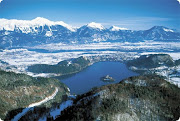
Photo of Lake Louie by AnaB*.

Copyright © 2008 by Open Water Source

Saturday, November 22, 2008

Long Distance Pool Swimming Around the World

It is not technically an open water swim, but the 24-hour Bad Radkersburg charity swim at Parktherme in Austria surely counts as a long-distance swim.


108 solo swimmers (69 men and 39 women) and 81 five-person teams – and their coaches and supporters – crowded the pool deck and lanes during this year's annual race in November race. Each swimmer uses an SMC Active Chip system to keep track of the number of lengths swum. The chips gave a detailed record of 140,103 lengths of the 50-meter pool or 7,005.15K (4,352 miles) cumulatively swum.

Mauro Giaconia, a 24-hour swimming specialist from Palermo, Italy swam 69.6K (43.24 miles) over the 24-hour period for the best performance among the men. Caroline Rakowitz, an endurance athlete from Spielberg, Austria swam 61.7K (38.3 miles) to top the women. ASKÖ SV Enns team swam 105.3K (65.4 miles) for the furthest distance among the 81 teams.

Hydrating and fueling is, of course, important and aided by the midnight pasta buffet and the breakfast. The swimmers went through 500 liters of Isostar sports drinks, 1,000 Isostar bars, plenty of Isostar chocolate cake, and boxes and boxes of Nestle breakfast cereals provided by More4Sport.


The swimmers and support crews were entertained through the evening by a dance company, a DJ and music from a professional ensemble, ranging from Broadway musicals to gospel and pop.

Bad Radkersburg is a small town of only 1,940 people in the southeastern part of Austria, but it is well-known for its spa and thermal springs.

12-hour and 24-hour pool swims are held throughout Europe, including in Italy, Switzerland, Germany and Monaco. Many 24-hour events are also held throughout the world, including Australia where a series is organized under the 24 Hour Mega Swim brand - see below:


As a frame of reference, two of world's top professional marathon swimmers – Paul Asmuth and James Kegley – partnered up at the famous 2-person Lac La Tuque 24-hour professional relay in Canada in 1980. In a lake with 16°-17°C water, Paul and James swam a total of 111K (69 miles or 34.5 miles each), alternating with each other every mile.

Sunday, September 28, 2008

USA Swimming Honors Its Best

USA Swimming honored Bill Rose, head coach of the Mission Viejo Nadadores, with its 2008 Glenn S. Hummer Award.

The Glenn S. Hummer Award winner is given to the person who had made the greatest contribution to the sport of long distance swimming. Rose's contributions included not only his role as the head coach of the 2008 U.S. Olympic Open Water Team, but also his coaching over the years at local ocean races, national open water championships and international FINA World Cup races. Over the last 2 years alone, Rose has coached open water swimmers competing in races from Melbourne, Beijing and Dubai to Portugal, London and numerous states across America.

Chloe Sutton, one of Rose's elite swimmers at Mission Viejo, was also honored by USA Swimming as its 2008 Female Open Water Swimmer of the Year. Sutton was the sole U.S. representative in the Olympic 10K Marathon Swim and demonstrated her pool speed by placing third in the 800-meter freestyle in the U.S. Olympic Swimming Trials.


Mark Warkentin, from the Santa Barbara Swim Club, was named the Male Open Water Swimmer of the Year for his outstanding open water performances over the past year, including an 8th-place finish in the Olympic 10K Marathon Swim in Beijing and his silver-medal performance at the 2008 World Open Water Swimming Championships where he was just out-touched by the 6'-7" Maarten van der Weijden in the 25K race.

These awards are decided upon by the Open Water Committee of USA Swimming whose members include Dale Petranech, chairman of the International Marathon Swimming Hall of Fame, Sid Cassidy, chairman of the FINA Technical Open Water Swimming Committee, Mark Schubert, USA Swimming National Team head coach and General Manager, professional swimmer and former 5K world champion Erica Rose, Catherine Vogt, USC assistant coach, Paul Asmuth, John Dussliere and Steven Munatones.

Saturday, September 20, 2008

California Swimming

California has been the training grounds to numerous great open water swimmers over the past 40 years: long-time English Channel record holder, Dr. Penny Lee Dean, world renowned Lynne Cox, the dominant professional marathon swimmer of the 1980s, Paul Asmuth, world champion Chad Hundeby, Olympic 10K marathon swimmers Mark Warkentin and Chloe Sutton and NCAA champion and masters pool and open water swimming legend Jim McConica, life guard legend hero and Olympic commentator Craig Hummer, and local ocean swimming champions Alex Kostich, Gerry Rodrigues, Lisa Hazen and Diane Graner.

Many of these individuals - and hundreds of thousands of others - have honed their skills at the local ocean races up and down the long coast of California, from La Jolla near San Diego to Aquatic Park in San Francisco Bay, as well as the numerous lakes and rivers throughout the state.

For a great open water swimming website with lots of photos from California open water swimming events, go to H2O Sports Photos.

Note: Californians have held the English Channel record for at least 26 years out of the past 36.

Wednesday, August 20, 2008

Men's Olympic 10K Marathon Swim - Results

Paul Asmuth, who was one of Olympic Mark Warkentin's coaches on the feeding station, said this of Mark's effort today, "He swam a really strategic race. His feedings went well and he was in good position. He swam real well. It was an exciting race, the other guys just had a little more at the end. Towards the end, Maarten drafted off of David Davies and they just got a big separation quickly."

All the men worked to put on a very entertaining race. Congratulations to everyone.

The final results of the Olympic 10K Marathon Swim are below.

Final results 2008 Olympic 10K Marathon Swim:

GOLD - Maarten van der Weijden, 1:51:51.6
SILVER - David Davies, 1:51:53.1 (1.5 seconds behind leader)
BRONZE - Thomas Lurz, 1:51:53.6 (2.0 seconds behind leader)
4 - Valerio Cleri, 1:52:07.5 (15.9 seconds behind leader)
5 - Evgeny Drattsev, 1:52:08.9 (17.3 seconds behind leader)
6 - Petar Stoychev, 1:52:09.1 (17.5 seconds behind leader)
7 - Brian Ryckeman, 1:52:10.7 (19.1 seconds behind leader)
8 - Mark Warkentin, 1:52:13.0 (21.4 seconds behind leader)
9 - Chad Ho, 1:52:13.1 (21.5 seconds behind leader)
10 - Erwin Maldonado, 1:52:13.6 (22.0 seconds behind leader)
11 - Ky Hurst, 1:52:13.7 (22.1 seconds behind leader)
12 - Igor Chervynskiy, 1:52:14.7 (23.1 seconds behind leader)
13 - Francisco José Hervás, 1:52:16.5 (24.9 seconds behind leader)
14 - Allan do Carmo, 1:52:16.6 (25.0 seconds behind leader)
15 - Gilles Rondy, 1:52:16.7 (25.1 seconds behind leader)
16 - Spyridon Gianniotis, 1:52:20.4 (28.8 behind leader)
17 - Rostislav Vitek, 1:52:41.8 (50.2 behind leader)
18 - Luis Escobar, 1:53:47.9 (1:56 behind leader)
19 - Saleh Mohammad, 1:54:37.7 (2:46 behind leader)
20 - Mohamed El Zanaty, 1:55:17.0 (3:25 behind leader)
21 - Damian Blaum, 1:55:48.6 (3:57 behind leader)
22 - Arseniy Lavrentyev, 2:03:39.6 (11:48 behind leader)
23 - Xin Tong, 2:09:13.4 (17:21 behind leader)
24 - Csaba Gercsak, did not finish
25 - Vladimir Dyatchin, disqualified in a time of 1:52:13.7 (22.1 seconds behind leader)

Copyright © 2008 by World Open Water Swimming Association

Monday, August 18, 2008

Chloe's Corner - Under Picture Perfect Conditions

At the pre-race meeting in Beijing this morning, the Olympic 10K Marathon Swim athletes were told the water temperature is a near perfect 27ºC - 27.5ºC (80.6ºF - 81.5ºF). But the weeds in the Olympic rowing venue has grown a bit and come nearly to the surface of the water in some locations.

But, all in all, America's medal hopefuls Chloe Sutton and Mark Warkentin will have great conditions to compete in. There is forecasted to be a slight wind that will only cause minor surface chop and the humidity that dropped significantly. Coach Bill Rose of the Mission Viejo Nadadores and Chloe's personal coach said, "Everyone is feeling great and the conditions are good. At the pre-race meeting today, there was nothing new. The course is good and everyone is ready to go. Chloe's feeling great."

"The quality of the water is excellent. In fact, we were told it is actually drinkable. It was cool this morning after it rained in the evening. Tomorrow, we will leave the hotel at 6:30 am and head down to the venue for a warm-up between 7 and 8 am. At 8 am, Chloe will report to the Ready Room for numbering. The pre-race meeting will be held at 8:30 am and at 8:40 am, the swimmers will be introduced to the crowd for a 9 am start. The awards ceremony will be at 11:30 am."

"Paul Asmuth will be on pontoon #1, which is closest to the start, to feed Chloe. John [Dussliere of the Santa Barbara Swim Club will be on pontoon #2. With Paul and John on the pontoons, I will be on a bike going up and down alongside the course, " said Coach Rose.

"Because of the warm water conditions, we decided to allow each athlete to have two coaches on the course," explained Sid Cassidy, the FINA Technical Open Water Swimming Committee chairman.

"The time has come," explained Nory Krutchen, the FINA Bureau Vice President at the pre-race meeting to the athletes and coaches. "The eyes of the world are upon you and the sport of open water swimming."

Photo by Pei Qingsheng at the Olympic 10K Marathon Swim qualification race start.

Copyright © 2008 by World Open Water Swimming Association

Sunday, August 17, 2008

What's A Feeding Stick?

The Olympic 10K Marathon Swim athletes will swim 4 loops of 2.5K in the Shunyi Olympic Rowing-Canoeing Park. The swimmers will pass a floating "feeding" pontoon where they will be handed drinks and gel packs from their coaches. The drinks are handed to the athletes via a "feeding stick" which is can be constructed of any material (including bamboo) and be of any length.

Most coaches hang a small flag of their country at the end of their feeding sticks so their position on the feeding pontoon (or station) can be more easily identified by swimmers in the water, especially when the swimmers are swimming fast or are in a large pack.

Under the rules, swimmers cannot touch the floating pontoon or feeding stick, so they grab their cups quickly while rolling over on their backs.

The 4 general rules of feeding among the open water swimmming community are as follows:


1. Spot and Seek (as the swimmer approaches the feeding pontoon).


2. Reach and Roll (as the swimmer grabs the cup or bottle).


3. Gulp and Go (within 2-3 seconds while on one's back).


4. Toss and Turn (as the swimmers throws the cup away and turns to go).

It is a skill and process that takes practice and near perfect timing with one's coach.


Paul Asmuth will feed Chloe Sutton during the women's 10K. John Dussliere will feed Mark Warkentin in the men's 10K.

Photos taken by Dr. Jim Miller at the 2003 and 2007 World Swimming Championships.

Copyright © 2008 by World Open Water Swimming Association

Friday, August 15, 2008

Olympic Crowds and Medal Glory

Crowds at the Shunyi Olympic Rowing-Canoeing Park for the canoeing competition have not been sold out, but the lack of a full-capacity crowd has not put a damper on the excitement for the athletes, fans, coaches, friends and family members in attendance.

With over 30,000 seats available for the canoeing stadium, it would be difficult to fill it up every day of competition.

But, when the winners cross the finish line, exuberation often knows no bounds. Toga's Benjamin Boukpeti won his country's first Olympic medal in the K-1 canoeing competition. After the race, he was so happy he broke his paddle.

If Chloe Sutton wins the women's Olympic 10K Marathon Swim, will her feeder Paul Asmuth break her feeding stick in joy? If Mark Warkentin wins the men's race, will his coach John Dussliere break his feeding stick after the race?

Probably not.

Definitely not.

John custom-made the feeding sticks for the American team out of a golf-ball retriever - and they are working out just fine.

Whoever wins, the International Marathon Swimming Hall of Fame should request the feeding stick for its archive and for open water swimming's historical significance.

Photo by Pei Qingsheng of Toga's Benjamin Boukpeti after the Olympic K-1 race.

Friday, August 8, 2008

Chloe's Corner - on the Feeding Station

Bill Rose is Chloe Sutton's team coach at the renowned Mission Viejo Nadadores in Southern California, and one of the USA Olympic Swim Team coaches, but it will be Paul Asmuth who will be handing Chloe her drinks from the feeding station during the Olympic 10K Marathon Swim.

Asmuth, USA Olympic Swim Team's Open Water Chief of the Mission, knows very well what Chloe and her marathon swimming competitors are going through, both in practice and during a race.

BTO (before the Olympics), Asmuth traveled from Baja California to the Nile River to compete and win prize money as the world's dominant pro marathon swimmer for nearly a decade. While he is still widely-recognized in foreign cities from Quebec to Italy where he was so dominant in the 1980's, he came three decades too early for his own personal Olympic glory.

Asmuth was well-known at Mission Viejo where he also trained like Chloe and on the world's professional marathon swimming circuit for his ability to withstand hours of pain.

"I recall in 1984 when he was injured, he decided to swim the 22-mile Atlantic City race. The water dropped down to 55-57 in the ocean and he won the race going away," recalled one of his competitors. "It was amazing; his shoulders were shot before he got in the freezing water for hours and he still beat the world's swimmers."

That's what Asmuth did as an athlete and that's the experience that he can discuss first-hand with Chloe to help her prepare for her own Olympic glory.

Photo by Pei Qingsheng shows Asmuth handing Chloe a bottle during the Olympic 10K qualification swim on the Beijing course.

Sunday, April 20, 2008

Champions, Adventurers, Record Holders Endurers

Courtesy of WOWSA, Huntington Beach, California.

The International Marathon Swimming Hall of Fame attempts to recognize the efforts of the most accomplished swimmers who participate in competitive events and do solo swims.

In our opinion, there are four general types of great open water swimmers:

1. The Champions
2. The Adventurers
3. The Record Holders
4. The Endurers

Each of these types of swimmers have significantly added to the annals of open water swimming history.

The Champions are those swimmers who are fastest in head-to-head competitions against other great open water swimmers. Abdel Latif Abou-Heif of Egypt in the 1950s, John Kinsella of Indiana in the 1970s, Paul Asmuth of Mission Viejo in the 1980s and, most recently, Maarten van der Weijden of the Netherlands, are examples of these Champions.

The Adventurers are those swimmers who have done unprecedented swims of historical proportions. Lynne Cox’s famous swim across the Bering Straits or Stewart Evans’ unprecedented swim from the Farallon Islands to the California mainland are just two examples of the exploits of these Adventurers.

The Record Holders are those swimmers who break records of acknowledged distances. Penny Lee Dean of California and Petar Stoychev of Bulgaria are two accomplished swimmers who set the bar by breaking the English Channel record. While there is always some luck in swimming in the right conditions (currents, wind, water temperature), there is no doubt that these Record Holders are to be held in the highest esteem.

The Endurers are similar to The Adventurers and include those swimmers who chose to swim the longest and furthest in terms of absolute distance and/or time. These swimmers include people like Diana Nyad of the U.S. who attempted to swim from Cuba to Florida in 1978 (in 41 hours 47 minutes), Suzie Maroney of Australia who did swim from Cuba to Florida in 24 hours 30 minutes or David Meca who took over 24 hours to swim from Spain to Ibiza, an island in the Mediterranean Sea. What drives these individuals to push past all mental and physical barriers during these lengthy and difficult swims is the stuff of legends.

Contributors to the sport can be involved in any of the swimmers described above. Escort pilots who guide the swimmers; coaches who train the swimmers; writers who describe the swimmers; filmmakers who document the swims; organizers who promote and direct swims; administrators who govern the sport.

Champions, Adventurers, Record Holders, Endurers - and Contributors who support them: they are all worthy of the ultimate admiration in the world of open water swimming and induction into the International Marathon Swimming Hall of Fame.

Copyright © 2008 by World Open Water Swimming Association

Wednesday, April 2, 2008

Who's Who in Open Water Swimming

From Captain Matthew Webb who first crossed the English Channel in 1875 to Lynne Cox who was the first person to swim in Antarctica, open water swimming has always attracted heroic and risk-taking adventurers. Many, but not all, of these adventurers have been inducted in the International Marathon Swimming Hall of Fame (IMSHOF).

This 10-part historical series will cover open water luminaries ranging from Keo Nakama, who first crossed the Molokai Channel in Hawaii, to modern-day heroes like Shelley Taylor-Smith.

First, a brief introduction of the IMSHOF may be useful to understanding how these great open water athletes were selected.

In 1961, the IMSHOF was founded by the Professional Marathon Swimmers Association to recognize the accomplished marathon swimmers. The International Swimming Hall of Fame (ISHOF) in Ft. Lauderdale, Florida provides similar recognition to the pool swimmers, water polo players, synchronized swimmers, divers, coaches and administrators. Under the direction of Buck Dawson, the ISHOF founder and executive director, the IMSHOF began its affiliation with the ISHOF.

Currently, the IMSHOF is governed and administered by Dale Petranech, its chairman and chief historian, and an international 24-member selection committee. The selection committee includes the following individuals:

1. Shelley Taylor-Smith of Australia, the dominant female professional marathon swimmer from the mid-1980’s to the mid-1990’s and current Secretary General of the FINA Technical Open Water Swimming Committee.
2. Sid Cassidy, current chairman of the FINA Technical Open Water Swimming Committee and former pro marathon swimmer.
3. Tim Johnson of Massachusetts, author of The History of Open Water Swimming and the world’s foremost authority on tidal influences on open water swimmers.
4. Paul Asmuth of California, the dominant professional marathon swimmer of the 1980’s.
5. Michael Read of England, 1960 Olympic Games swimmer and former holder of the title King of the Channel for his 33 successful swims of the English Channel (to date).
6. Conrad Wennerberg of Illinois, Chairman Emeritus of the IMSHOF and author of Winds, Waves and Sunburn: A Brief History of Marathon Swimming, one of the most authoritative books written on marathon swimming.
7. Steven Munatones of California, creator of World Open Water Swimming Association, multi-time USA Swimming open water coach and former professional marathon swimmer.
8. Alison Streeter of the U.K., Queen of the Channel for her 43 successful swims of the English Channel.
9. Kevin Murphy of the U.K., current King of the Channel for his 34 successful swims of the English Channel.
10. Pierre Otis of Canada, former Chairman of the Traversée internationale du lac St-Jean.
11. Dale Petranech of New Jersey, chairman of the IMSHOF and former chairman of the FINA Open Water Swimming Commission.
12. Carol Sing of California, oldest female swimmer to cross the English Channel.
13. Montserrat Tresserras of Spain, first Spaniard to swim the Straits of Gibraltar and English Channel and first female swimmer to swim the English Channel both ways (1961).
14. Irene van der Laan of the Netherlands, former English Channel double-crossing record holder and long-time professional marathon swimmer.
15. Lynn Blouin of Canada, race director of the Traversée internationale du Lac Memphrémagag and Vice President of the IMSHOF.
16. Richard Broer of the Netherlands, creator of Netherlands Open Water web (www.noww.nl) and open water swimming promoter.
17. David Clark of California, a swimmer of, and coach, escort and observer for swimmers of the Catalina Channel and English Channel.
18. Buck Dawson, the founder and Director Emeritus of ISHOF and Camp Director of Camp Ak-O-Mak and long-time supporter of open water swimming.
19. Bob Duenkel of Florida, the Curator and Assistant CEO of the ISHOF and former USA Swimming national open water team coach.
20. Silvia Dalotto of Argentina, a certified FINA Open Water official, advocate of South American open water swimmers and former top professional marathon swimmer.
21. James Doty of Massachusetts, a former professional marathon swimmer and founder of the New England Marathon Swimming Association.
22. Maurice Ferguson of the U.K., former president of the British Long Distance Swimming Association.
23. Dr. Marcella MacDonald of Connecticut, successfully completed 6 English Channel crossing including a double-crossing.
24. Dr. Osama Ahmed Momtaz of Egypt, recipient of the National Award of Excellency in Sport from the Egyptian Government, Director of the Egyptian Swimming Federation and former professional marathon swimmer.

The IMSOF not only attempts to recognize the efforts of the most accomplished swimmers who participate in competitive events, but also recognizes the efforts of solo swims, where the swimmer battles the elements and unchartered waters.

The objectives of the IMSHOF are:

1. To nominate and select outstanding marathon swimmers and officials who make the sport possible. To date over 160 individuals and organizations have been honored. Anyone may nominate a candidate for consideration by submitting an application.

2. To establish and maintain a biography on the swimmers selected as IMSHOF honorees.

3. To accept nominations and award The Irving Davids/Captain Roger Wheeler Memorial Award established in 1970 by the New England Marathon Swimming Association on behalf of the ISHOF which honors the contribution of individuals who make major contributions to marathon swimming.

4. To nominate, select and award a IMSHOF Certificate of Merit to swimmers and organizations who make major contributions to marathon swimming. This program was started in 1994 to recognize those who may not (yet) meet the standards for honoree status. To date, over 110 individuals and organizations have been honored. Anyone may nominate a candidate for consideration by submitting an application.

5. To accept official records for the ISHOF Henning Library and memorabilia for the ISHOF Museum.

6. To serve as resource and provide expertise to the ISHOF committees on matters related to open water swimming and marathon swimming.

7. To record marathon swims that are observed, but are not conducted under the jurisdiction of an official or sanctioning body. The role is to record, for historical purposes, the conditions and methods used by and reported by the swimmer. A certificate of the recording can be obtained upon request from the IMSHOF Secretary.

Stay tuned – for this is only part 1 of a 10-part series on the world’s greatest open water swimmers or marathon swimming endeavors.

Copyright © 2008 by World Open Water Swimming Association