Showing posts with label Cadiz Freedom Swim. Show all posts

Wednesday, August 5, 2009

Unique Penalty For Wetsuits, But All For A Good Cause

The Cadiz Swim Series - where swimming for good is the goal - has a unique set of rules that govern wetsuit usage in its upcoming relay race this weekend:

· Wetsuit swimmers will receive a 1-minute time penalty for every 1K swam


The Cadiz Swim Series' Women's Day Swim is a 4K relay for 1-4 swimmers that must include at least one woman. Every relay team must swim 4K on a 500-meter course (around the buoy and back), but it is up to the team who swims when and how far (i.e., a 'freestyle relay').

All funds from the Women's Day Swim will benefit the Western Cape Cerebral Palsy Association.

Most swims in the Cadiz Swim Series are qualifiers for the Cadiz Freedom Swim 2010, an extremely tough cold-water ocean competition – a 7.5K race across the Robben Island Channel, known for its bitterly cold water (around 13˚C or 55˚F) and unpredictable currents.

Copyright © 2009 by World Open Water Swimming Association

Wednesday, May 20, 2009

Back Swimming Safely In The Sea

We previously posted a first-hand account from Cyrise Sanders about her hypothermia scare during practice in the Pacific Ocean.

Here is another dramatic first-hand account about hypothermia from Terry Griffin who successfully completed the 2009 Cadiz Freedom Swim in South Africa:

With a water temperature of 13°C (55.4°F) and a fog hovering over the channel, 60-year-old Terry described the race in vivid detail:

"After the first hour or so I lost complete track of time and distance...it was considerably more choppy and one really had the feeling of being in deep ocean. The field was much more spread out and...I began to feel that it was getting beyond a joke. After that, I stopped only to have sips of drink, and was not in a particularly good state."

As Terry's core body temperature was gradually decreasing, he continued his description, "...I had no sensation of being very cold, and didn’t even feel very tired, but I was aware that my stroke was not strong and that I was battling to make smooth headway. All I wanted was to get to that damn beach..."


"...With about 1km to go I was in trouble. I was barely moving. I couldn’t discern any clear shapes on the beach. It was like looking at a mirage, everything hugely distorted and hazy, with brief flashes of the Cadiz finish banner. I had no idea where I was in relation to the shore
."

Terry described his post-race recovery, "When I arrived in the emergency room at the beach, my core temperature was 27°C (80.6°F). They hooked me up to an ECG and noted that my heart was experiencing atrial fibrillation.

Technically, I was close to flat-lining."

"...Once I was settled on the warm bed I felt OK, albeit a bit like coming out of a deep sleep: groggy and slightly disoriented, not fully aware of what was going on around me. My lower back and buttocks were aching but the pain abated after about half an hour. I attempted to drink some hot chocolate, but I didn’t enjoy it and it seemed to make me slightly nauseous
."

Terry's temperature recovery over the next two hours was as follows:

4:25 pm - 27.0°C (80.6°F)
4:50 pm - 32.0°C (89.6°F)
5:00 pm - 33.0°C (91.4°F)
5:20 pm - 34.5°C (94.1°F)
5:45 pm - 35.7°C (96.2°F)
6:10 pm - 36.0°C (96.8°F)
6:15 pm - discharged from the hospital on the beach

Terry continues, "...from the beach I was driven to the Cape Town Medi-Clinic and I was admitted to the Emergency Room where they hooked me up to an ECG, took my blood pressure and a blood sample, and a chest X-ray. At this stage I was still feeling reasonably normal, albeit a bit tired...

The blood tests showed a cardiac enzyme leak indicating that I had either just had or was just about to have a heart attack. I was sent straight to the Intensive Care Unit, where I was again hooked up to an ECG and put on a drip. They gave me a mild sleeping pill and I slept like a log...

Next morning, Monday, a new set of blood tests was done and these showed that the cardiac enzyme leak had dissipated and everything was back to normal. Nevertheless, a further 24 hours of observation was required just to make sure I didn’t relapse. The only drugs I received were injections to prevent blood clotting. On the Tuesday morning they sent me home.

A week later, I was back in the sea.
"

Terry's post-race recovery can be read here. As an educational reference, his full account can be read here.

Sunday, May 3, 2009

Meeting the Challenge in Cold Cadiz

We previously reported on the recent 7.5K Cadiz Freedom Swim in where Olympic 10K swimmer Natalie du Toit set a new record in 13°C (55.4°F) waters from Robben Island to the finish at Blouberg's Big Bay in South Africa.

Below is a 5-minute video on the event from Zoopy:

Tuesday, April 28, 2009

Cadiz Freedom Swim Delayed Record

Olympic 10K swimmer Natalie du Toit broke a 22-year-old record at the 7.5K Cadiz Freedom Swim in South Africa this past weekend, despite very trying conditions.

Natalie won in 1 hour and 35 minutes, less than a minute in front of the men's winner, Tyron Venter.

After a postponement of the race on Saturday due to strong winds and adverse ocean conditions, the 275 solo and relay swimmer gathered again on Sunday only to face another delay of nearly 4 hours due to a heavy fog.

When the fog finally lifted, the swimmers jumped into the 13°C (55.4°F) waters - with possible Great White sharks - to traverse 7.5K from Robben Island* to the finish at Blouberg's Big Bay.


Typical to her thoughtful nature, Natalie said that although she was delighted to win, she felt privileged to have participated in an event which raised funds for the children of Vista Nova School.

Final results are as follows:


Solo Men:
1st Tyron Venter – 1:36:39
2nd Phillip Chappell – 1:45:45
3rd Anton Botha – 1:46:48
4th Robert Mason – 1:50:06

Solo Female:
1st Natalie du Toit – 1:35:45
2nd Liz Webb – 2:01:21
3rd Sanmari Woithe – 2:04:18
4th Lara Truter – 2:08:20

Schools Relay:
1st Paul Roos Gymnasium - 1:46:17
2nd Rhenish Starfishes - 1:46:43
3rd Camps Bay High Dolphins - 1:52:43

Relay Non-wetsuits
1st Fantastic Four - 1:39:12
2nd Team Turbo – 1:49:00
3rd Camps Bay High Dolphins - 1:52:43
Kevin’s Aquatic Tigers - 1:55:05

Relay Wetsuits
1st Koos Kwaak and the Waveriders - 1:38:45
2nd Barbie and Ken - 1:41:28
3rd Psycho Shenanigans - 1:45:28

Longest in the water:
Male: Clint Williams - 3:23:34
Female: Jobre Stassen – 3:07:25

Additionally, veteran swimmer Theodore Yach for successfully completing his 54th channel crossing.

* Robben Island is a World Heritage site where Nelson Mandela was imprisoned for 18 years.


Photos above show Natalie and a male swimmer finishing at the 2008 event. Photos from the 2009 event will be uploaded to the Cadiz Freedom Swim website later this week.

Sunday, January 11, 2009

Ram Tough

Ram Barkai, sponsor of the tough 7.5K Cadiz Freedom Swim will swim 3K in 1°-4C (33.8°-39.2°F) waters of Lake Zurich on January 30th, together with Andrew Chin. The Lake Zurich swim in winter will be tough, but Ram and Andrew are very well-prepared. Ram is particularly well-suited, having done a 1K swim in Antarctica in 2008.

Similar to Lewis Gordon Pugh and Lynne Cox, Ram is one of the world’s few truly great cold-water swimmers. Ram says, "Training is the most difficult and nauseous part of his cold-water attempts. It reminds me to respect the cold water with every stroke. When you are swimming on the edge of the human’s ability to cope, you have no idea when your body may give in to the cold. It always looks warmer on the outside once you 'defrost'. Cold-water swimming is usually shorter than long distance swimming due to the extreme risk involved and the limitations of the human body."

Ram’s Swim in Antarctica was held on February 7th 2008 on the last day of the Antarctic summer at 70° latitude near an Indian Scientific station named Maitri. Ram and his team had to hike for 1½ hours through ice and rocks to reach the lake where he would attempt his swim. Ram found a lake with 1°C water while the air hovered around 0°C and he swam 1K.

When asked why he did it, Ram said, "Looking back, I am not sure why I did it, but hell, I am ready to do it again and even maybe try it over a longer distance. I have always been fascinated by the human mind and its ability to push the body far beyond its perceived physical limitations." [Photo on left shows Ram doing a warm-up swim, but that term is used in a figurative sense.]

But entering into 1°C water requires a lot more than physiological and mental preparation. As Ram explains, "The logistics around the swim was a real challenge in itself. No one prepares you for the difficulties surrounding such an attempt in Antarctica. It is basically a huge desert of solid ice. No roads, airports, transportation or any kind of formal assistance. Everything depends on the hospitality of the people who run the scientific stations that control Antarctica. You also need significant amounts of money to fund the project. However, the Russians and the Indians were extremely hospitable and accommodating and together with Patrick Woodhead and his team we managed to get there, find a lake, swim it and come back with only a few numb toes." [See photo on left]

But, the long-term affects of his swim took on various forms: it took Ram 3 months to get the sensation back in his toes, albeit not 100%. It was clear that the swim required the ultimate in mental preparation. "Diving into the 1°C water seems like madness now; however, I remember being so focused that I didn’t really feel the cold, just pain and lack of co-operation from my hands and feet. The water felt like a solution, thick and milky. I had to start swimming immediately without stopping for a second. I constantly had to generate heat and when I turned, it took me 2 to 3 minutes to get back into my stroke. Breathing was especially heavy, I expected it and remembered that the most important thing is NOT TO PANIC. Slow deep breaths, long strokes, no sprinting or hyper ventilating, just trying to get into a rhythm I can keep going for as long as my limbs obey my brain. I was so focused internally on each and every stroke and breath that time went by very quickly. After around 600 meters, I started to feel my limbs getting heavy and less cooperative. It is a very frustrating feeling when your stroke seems to be perfect – in your mind – and you are moving at a snail’s pace. The doctor told me that surviving stage 1 and 2 [of hypothermia] is great, but stage 3 is dangerous and the risk of cardiac arrest increases rapidly after 15 minutes. It is not something you feel developing slowly and then decide to stop it, it just happens and the odds of recovery from cardiac arrest induced by hypothermia are quite slim."
"I started to feel dizzy and unfocused, I knew that my arms felt very heavy and my stroke was extremely inefficient. The last 100 meters were a little hazy. I knew I made it, but I had to get to the end and I couldn’t really walk or talk. The team helped me into a small expedition tent to warm me up. I wasn’t feeling great. I was frozen and feeling nauseous. I couldn’t drink, but I was very thirsty."

"It took me around twenty minutes to come back to reality, dress back into Antarctic gear and step out the tent. I felt delirious and in desperate need for a single malt to celebrate my success
."

Here is to Ram’s next dream on January 30th in Lake Zurich.

Copyright © 2010 by Open Water Source

Wednesday, December 17, 2008

Celebrating Freedom in the Open Water

The 7.5K Cadiz Freedom Swim, held annually in April, is one of the toughest major cold water races in the world – 7.5K from the shores of Robben Island, across the famous Robben Island channel, to the Big Bay beach on Cape Town’s False Bay coast.

Robben Island is located offshore from Cape Town, South Africa and was used as a cruel prison for nearly 400 years.

From 1964 to 1982, Robben Island was the prison for Nelson Mandela. Today, the island is a World Heritage site and offers one of the world’s great channel challenges. The Robben Island channel is known for its bitterly cold water (around 13°C or 55.4°F) and strong, unpredictable currents.

The annual swim takes place this year on April 25th, celebrating Freedom Day in South Africa, the day Nelson Mandela won the 1994 election in South Africa. The solo race is conducted under English Channel rules (i.e., no wetsuits). The race also has several types of relays: 2 swimmers, 4 swimmers, no wetsuits, wetsuits, corporate with wetsuits optional, school with wetsuits (ages 12-18).

Over 200 swimmers are expected in April 2009, including Olympian Natalie du Toit who has won the women’s division every year she has participated, Carina Brewer (shown to left) and Theo Yacht.

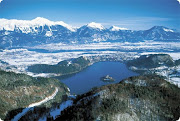
Photo of Robben Island from Cape Swim website. Photo of Carina Brewer from her website.

Copyright © 2009 by World Open Water Swimming Association