On January 6th, Chris Palfrey, Penny Palfrey and Julie Bradshaw organized two relay teams that set a world lake swimming record by completing a 126 km (78.2 miles) triple-crossing of Lake Taupo, the largest lake in New Zealand
 The men’s team finished in 33 hours 31 minutes 15 seconds with the women’s team very close behind in 33 hours 33 minutes 45 seconds. The swimmers included Julie Bradshaw (England), Michelle Macy (USA), Barbara Pellick (Australia), Penny Palfrey (Australia), Lucy Roper (England) and Heather Osborn (New Zealand).
The men's team included Steve Junk (Australia), Mark Cockroft (New Zealand), Dougal Hunt (Australia), Chris Palfrey (Australia) and Stephen Spence (Australia) with New Zealand legend Philip Rush (shown above), the fastest person to complete a triple crossing of the English Channel, as a key support person.
Below is an excerpt from a first-person account of the Taupo x 3 relay by Chris Palrey:
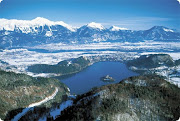
By any standards, Lake Taupo is big. Located in the centre of the north island of New Zealand, the lake was formed by a massive volcanic explosion which made an enormous divot in the landscape, eventually filling with fresh water. Roughly 40 km long, and almost as wide, our boat skippers said with some pride, that the lake covered the same area as Singapore.
The idea to do a relay swim across the lake came about back in 2007. Because Philip Rush had told us previously that there had been a small number of solo and relay crossings of the lake, I said, “How about a triple crossing of the lake?” And the wheels were set in motion.
Philip took care of the boats and inflatable boats for guiding swimmers at close quarters, one for each team.
We determined rules for the swim and adopted the Channel Swimming Association and Channel Piloting & Swimming Federation rules for relay crossings and adopted these rules:
• No wetsuits. Swimsuits must be FINA approved.
• No artificial aids.
• No external assistance to the swimmer. The swimmer cannot be touched (except on the relay changes) or be supported while swimming.
• Relay changeovers to occur each hour. That is, one person swims for one hour, and then has five hours rest, repeating the sequence until the finish.
• Each relay change to occur by the fresh person swimming up behind the retiring swimmer, tagging hands above the water and then taking over.
• Swimmers to remain in their designated order.
• Swimmer to clear the water at the end of each lap and immediately return and recommence swimming.
Our group filtered into the town of Taupo, at the northern end of the lake, between December 31 and January 3. And Taupo itself was bustling, being a favourite holiday destination for the Kiwis. There was great camaraderie between the group and a sense of oneness.
On January 4th, Philip gave the final briefing. The water temperature was 18.5°C (65°F) and the weather forecast was good, so we would swim the following day. We met at the marina at 2.00am on Monday January 5th, loaded the boats, and started our journey to the southern end of the lake.
 The plan was to start at first light from near Tokaanu, at the southern most point of the lake, heading roughly north east past Motutaiko Island, cutting close to Rangitiri point, before finishing on the beach in front of the Waikato River. The distance by GPS for one lap was 40.2K. The second lap would retrace our course back to the starting point and the final lap was a repeat of the first. The idea of starting early was to have only one night of swimming, as we thought we might take anything from 36 to 40 hours to complete the journey, depending on weather conditions.
 We reached our starting point at 5.00 am. The water was calm, but we did not know how long the good conditions would last. We got underway at 5.33 am.
It was said many times that this was not a race and that we were one group, embarking on a shared challenge. But, beneath the surface, we were athletes with strong competitive natures. Penny and Steve managed 3.9 km in 57 minutes [on the first leg]. Mark and Michelle were next up and even though they had said they didn’t want to go hard, early on in the journey, it was clear that neither swimmer wanted the other to gain an advantage.
Mark established a 20-metre lead on Michelle as they both did 3.9 km for their one-hour rotation. We were changing over at 6.30, 7.30, 8.30, etc to keep it simple. Up next was Dougal and Barb and he managed to give the boys a 100-metre advantage, doing 3.8 km in his hour.
Heather and I were up next. I have had a niggling shoulder injury for a few months so I had resolved to take it steady. I surrendered the lead and handed the girls a 100-metre advantage.
Julie and Stephen were up next. Stephen jumped in [and] it was clear that he was a man on a mission. He did an impressive 4 km in his hour and gave us back a 200-metre lead.
At about this time, it occurred to us blokes, that we actually had a chance of beating the girls, although the swim was never meant to be a race. I thought the men would finish well behind. Anyhow, we now realised that we were going to have some fairly close rivalry, so the boys all lifted the pace considerably. In the first five one hour rotations, we managed 19.1K, and in the second five hours we achieved 20 km. But the girls were never far behind.
The men finished the first leg of 40.2 km in a time of 10 hours 22 minutes; the girls were a mere 6 minutes astern.
In the course of the early afternoon, a light breeze had developed from the south. So we enjoyed a slight push along for the last 1½ hours of the first lap. But as we now started retracing our strokes toward the southern end of the lake, we now had to punch into a light headwind. The wind increased to around 10 knots from a WSW direction until around 3 am.
We [faced] a 2-foot chop. In our first five-hour rotation [on] the second lap, we covered 18 km, compared to 20 km for the latter half of the first lap.
 [Between] 6.30 to 7.30 pm, with the breeze and the sun sinking low on the horizon, it was becoming quite cool. After 14 hours of swimming, we were starting to feel tired.
 My next shift in the water was [between] 11:30 pm to 12:30am. It was dark and very choppy. Swimming at night was actually quite enjoyable. There was a ¾ moon which gave some natural light, there was nothing to fear from predators, and time seemed to tick by much faster than during the day.
We still held a slender 150m lead on the girls, which we held until the end of the second lap. We had covered the second lap in 12 hours 15 minutes and the girls finished their second lap a mere 4 minutes behind. Whilst the swim was not a race, the rivalry was as intense as it was fascinating.
By mid morning, the blokes had all done five one-hour rotations at ever increasing amounts of effort, and we were starting to suffer. And the girls were either nipping at our heels or enjoying a slight lead.
When I took over from Dougal, we were abeam of Motutaiko Island, about half way through the last lap. The water was calm and I was swimming just in front of the bow. I could see the girls boat 250 metres to our right and about 30 metres in front. I could even see the splash from Julie’s stroke. When Stephen took over from me, we had a good 200m lead.
 When Steve and Penny took to the water for their final burst, the blokes enjoyed a 600m lead. One hour later, when Mark and Michelle went into battle, our lead was cut to less than 50 metres. Steve did an incredible 4.5K in his hour, on his seventh rotation, and we almost had to drag him out of the water. So that meant Penny must have covered 5 km. In fresh water, after a day and a half, with very little sleep and the accumulated fatigue, that was quite extraordinary.
Mark and Michelle had previously been very evenly matched, and with only around 10 km to go, it couldn’t have been closer. For 30 minutes it was neck and neck, with no change in positions. But then, as we approached Rangatiri point, we started to inch ahead. We were about 100m closer to the point and our skippers wanted to cut as close to the shore as possible [to] pick up any current.
We had a little over 100m lead when Barb and Dougal started their final rotation. We only had 6 km to go, and could see the sailing club building, where we would finish our epic journey.
I was hoping for a lead, as Heather and I would be doing the final 2K sprint to shore. At the last change, Dougal had given us a 200m lead. Heather had previously been faster than I, so I went as hard as I could. Every few minutes, I snuck a quick peep under my shoulder, but my confidence was growing as I could see their boat wasn’t getting any closer. And then finally, I swam past the channel markers at the river entrance, and could see the bottom. The guys on the boat jumped in and swam the last 200m with me.
Standing and running up the sand was an amazing feeling. We were sunburnt, very sore and physically spent, but almost overwhelmed with our accomplishment. We raised our arms and cheered Rod and Steve (skippers) and Paul (safety officer/observer) back on the boat.
Heather hit the beach a mere 2 minutes 39 seconds behind, and the other girls also swam in with her. There were hugs, kisses and handshakes all round as we huddled together, to the amusement of the local beachgoers.
WE DID IT!!! After 120.6K, Philip advised our finishing time at 33 hours 31 minutes 15 seconds. The girls did 33 hours 33 minutes 54 seconds. I don’t think it would be possible to find two teams so evenly matched.
Our splits were:
Men: Lap 1 (10:22), Lap 2 (12:15), Lap 3 (10.54)
Women: Lap 1 (10:28), Lap 2 (12:13), Lap 3 (10:53)
A month before our swim, we became aware that a world record relay lake swim had been set in Florida in September, 2008. In that relay, two teams of 50 swimmers, each doing 2 km, covered 100 km in 37 hours 6 minutes and 41 hours 15 minutes, respectively.
Whilst we were not motivated by the record, we knew that we only had to finish to break it, so we will certainly proceed to have it ratified. And it appears that both teams will create a record.
New Zealand is a scenic and beautiful country. Swimmers are welcome to try to break our relay record, or solo swimmers can attempt the full crossing. Philip Rush is the best contact person for this.
Copyright © 2009 by World Open Water Swimming Association